Costs incurred in the operation, maintenance and support of a digital solution
What does an SLA cost? As is so often the case, the answer is: it depends.
In principle, you most likely have the entirely justified expectation that we will still be there for you and your product once the initial development is completed. At the same time, it is neither in our interest nor our clients' for an entire project team to just sit around waiting to solve a problem in a product that, hopefully, won't even occur in the first place. That’s why we need a middle ground between "once the final development sprint is done, everyone disappears" and "we fund a product team that has nothing to do all day." This middle ground is called "availability."
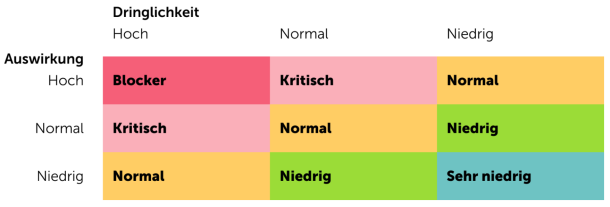
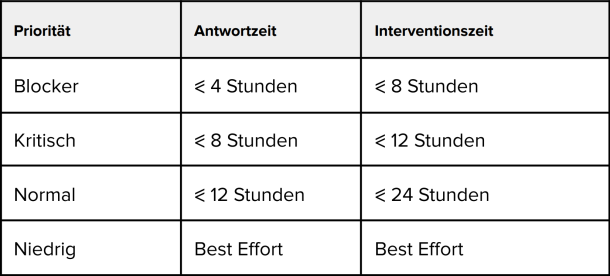
Availability is a major (cost) component in the SLA and ensures that we can maintain a support team dedicated to handling all incoming issues. In this area, timing is everything: if all support tickets need to be tackled within a very short timeframe, and in emergencies, even on weekends, it will be more expensive than if things can occasionally take a bit longer.
The second cost factor relates to the system itself. The following factors are significant:
What components are involved? (Backend, APIs & interfaces, CMS, frontends, etc.)
How extensive is the solution? Key factors include: complexity, data volume, number of users.
Which systems are used and what costs do they incur? A cloud server is almost always required, which in turn needs a monitoring service. Other external services that are frequently used and incur costs include: email delivery systems, authentication services, spam and fraud prevention tools, payment providers, etc.
The third factor, which is linked to the second, concerns the expectations regarding our service. For example: practically all our SLAs for native apps include a provision where we test the app on beta versions of Google’s Android and Apple’s iOS during the summer. This allows us to identify what needs to be adapted before the new operating system generations are officially released in the fall. If you can and want to do this yourself: go for it! Your SLA will be cheaper, though the responsibility for the app's functionality after the OS update will naturally rest with you.
Support and options are the final factor: based on our experience, we suggest the expected support effort and include a corresponding hourly quota in the contract. How much that is depends heavily on the respective product or project.
Taking these four factors into account, as a rule of thumb you can expect annual costs of around 5% to 15% of the original development costs. A concrete example: if developing your app costs 100,000 francs, you can assume that maintenance, operation, and support costs will range between 5,000 and 15,000 francs annually.
Something many of our clients also find convenient is to set aside a certain budget in the contract for optional add-ons. This provides the flexibility to pragmatically implement minor changes in a practical way, without having to trigger a whole new proposal, contract, or purchasing process. We’ll tailor this entirely to your requirements and are happy to discuss them with you!