Thorough documentation is the foundation for a clear and distinctive visual identity. It ensures that your design decisions have a lasting impact and that your brand remains consistent across all channels.

By keeping all guidelines in one central location, you build the groundwork for maximum brand recognition. This starts with a precise style guide that defines your product’s core visual elements and guidelines. As demands grow, a dynamic design system offers the opportunity to keep your brand vibrant and develop it efficiently—for a cohesive user experience that builds trust.

What is a design system?

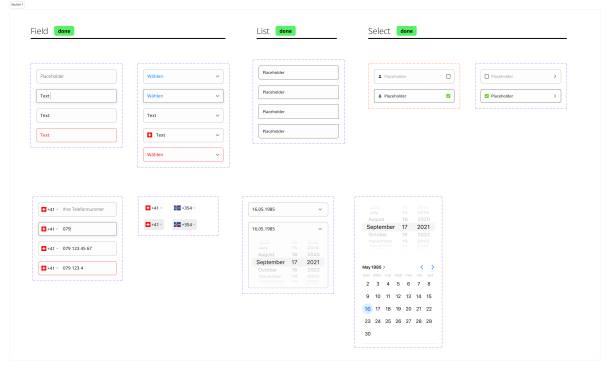
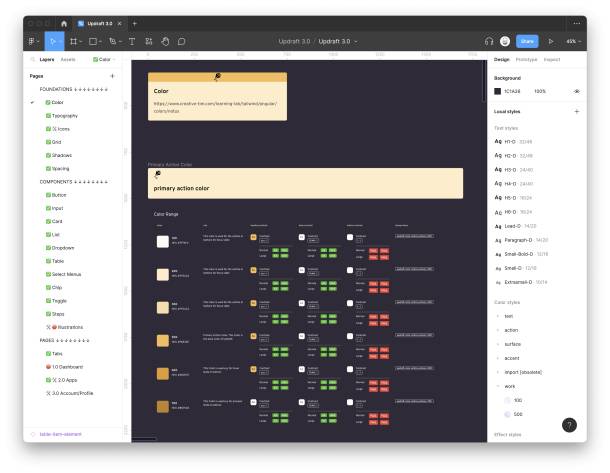
A design system is a comprehensive collection of guidelines, components, and assets used to create a unified and consistent design for digital products. Design systems define principles and elements that shape the user experience when interacting with a product. It is an effective tool for facilitating the design, development, and maintenance of websites, apps, or other digital products. A design system, so to speak, forms the foundation for product design. It contains not only information about the visual appearance but also other relevant aspects of a digital presence, such as guidelines for language or accessibility.

You can think of a design system as a living set of rules that is continuously updated and maintained to ensure that it keeps pace with a product's changing requirements.

The Difference Between Design Systems and Style Guides

Style guides focus primarily on visual elements, colors, typography, and imagery. Design systems, on the other hand, take a more holistic approach and also incorporate coding standards, accessibility, and usability guidelines.

The Benefits of a Design System

A design system streamlines workflows, ensures cross-product consistency, and fosters seamless collaboration between design and development teams.

For designers, a design system offers a rich foundation of predefined decisions. Leveraging pre-built components makes it significantly faster to build UI variations and adapt layouts for different screen sizes or modes. This shifts the focus away from repetitive tasks, freeing up valuable time to solve complex UX challenges and create more intuitive, engaging user experiences.

However, a design system reaches its full potential during development—especially for frequently used UI patterns. While existing components may reach their limits when facing unique or complex challenges, this highlights one of the system’s most underrated advantages: because standard elements don't need to be reinvented, teams gain the cognitive space and time required to engineer tailor-made solutions. Once resolved, these new components are integrated back into the core library, allowing the design system to evolve organically and prepare the team for future challenges.

If a design system already includes code elements, this also makes the developers’ work easier.

All in all, a design system makes the development process more efficient, ensures a consistent user experience, and reinforces brand identity across all digital products.

When does it make sense to build and maintain a design system?

The decision for or against a design system is primarily a matter of proportionality and cost-effectiveness. For projects with a clearly defined scope or for initial product prototypes, a comprehensive design system is often not the best approach at the outset, since the focus here is on rapid, agile implementation. There is no one-size-fits-all answer as to when the optimal time for implementation has arrived. This depends on the long-term product vision, team size, and scaling requirements. Implementation is therefore always a case-by-case decision aimed at allocating resources precisely where they create the greatest value. 

There are various guidelines you can follow:

  • Are there inconsistencies in your product across different platforms?

  • Are multiple teams—perhaps even in different locations—working on the same product? A design system provides a common foundation

  • Are there recurring design and development tasks? If similar components need to be created frequently, a design system speeds up workflows

  • Long-term efficiency and scalability: Those who aren’t just looking for short-term solutions but want to sustainably optimize design and development processes will benefit from a centrally maintained system.

  • Is there an umbrella brand that encompasses various digital products?

Challenges

Although a design system offers enormous long-term benefits, its implementation and maintenance come with significant challenges. A design system is not a one-time project, but a living product: It requires ongoing maintenance and constant attention to keep pace with evolving digital products. Furthermore, setting it up initially requires a significant investment of time and resources—an effort whose strategic value often only pays off in day-to-day operations after a considerable period of time. Furthermore, a design system drives a cultural transformation: It is not just a new tool, but fundamentally changes the way design and development teams collaborate with one another.


In short: While the initial setup and ongoing maintenance require some effort, this investment definitely pays off in the long run, as it greatly simplifies and accelerates future concept, design, and development processes. 


Our Expertise

Our Concept & Design Team will help you develop your design system. Whether you already have an existing product or are just getting started, we’ll work with you to determine if a design system makes sense and lay the groundwork for a scalable system. More on this topic: https://appswithlove.com/blog/was-ist-ein-design-system

0:00
0:00