How are requirements documented and processed?
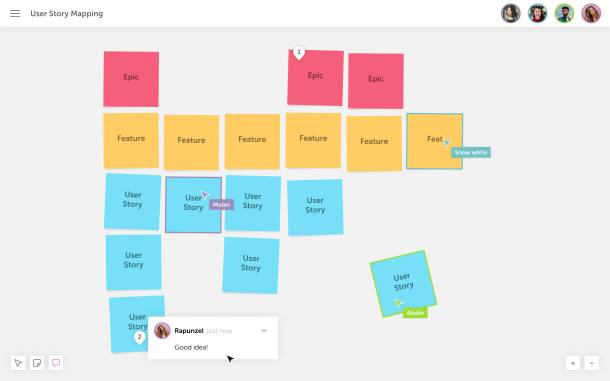
Requirements are documented in the form of so-called epics, features and user stories. These follow a clearly defined pattern:
An epic is a larger unit of work and describes a high-level requirement for a product. For example: "Users can create a profile."
Generally, several Features together form an Epic. Features are more detailed than epics but still describe what a product should do at a relatively high level. For example, the epic "Create profile" could consist of the features "Enter user name" and "Upload profile picture".
Features are then further divided into user stories and described in even greater detail. User stories describe the desired end result from the end user's perspective. For the feature "Upload profile picture," the following user stories could be formulated, for example:
"As a user, I want to be able to select and upload a picture from my photo gallery so that my profile feels more personal."
"As a user, I would like to be able to crop my selected image before uploading it so that I can use the desired image section."
How documentation is handled often depends on what should happen next with the requirements. If the goal is an initial cost estimate, for example, a list in a Google Sheet or Excel file is often the simplest approach. When the requirements are ready for implementation, they move into an issue tracking tool that assists with planning and provides functions for distributing requirements across individual project phases (sprints). We use Clickup for this, or systems used by our clients such as Jira or Azure DevOps – we're experienced and flexible in this regard.