Less risk and early added value thanks to prototyping

Prototypes are an unbeatable tool in software development for making digital products tangible before any programming effort is required. They're the key to testing ideas, checking technical feasibility and designing the user experience at an early stage.

Very early on, often as early as the user research phase, we develop prototypes that demonstrate how the finished app might behave or make specific aspects of the user experience and interaction design tangible. This enables us to understand how the product will feel and, at the same time, gain valuable insights into its usability and operating concept. For our clients, this translates to early added value and reduced risk.

What's prototyping?

Prototypes are used to simulate digital products or their individual components – be it an app, a website, or any other interface. Prototypes show how the solution will feel and function without it being fully functional yet.

Types of prototypes

At Apps with love, we generally distinguish between three types of prototypes, each of which is individually tailored to specific needs and use cases.

Functional prototypes

With functional prototypes, the focus is on the user flow and the usability of a digital product. The goal is to determine whether functions are placed so that users can actually find and use them. The visual appearance isn't the priority here. Instead, the focus is on mapping the app in its full scope, often as so-called "click dummies" based on wireframes and without detailed content.

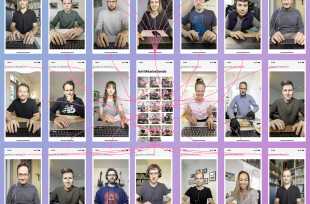
The functional prototype reflects the scope and various functions of the app.

Visual prototypes

Visual prototypes are usually limited to specific visual elements, such as transitions between screens or animations. The goal isn't necessarily to map a digital solution in its entirety, but rather to illustrate the design and character of a product. This is ideal for projects where the "look and feel" is paramount.

Classic examples of visual prototypes include animations or transitions.

Visual prototype for animated tab bar icons

Technical prototypes

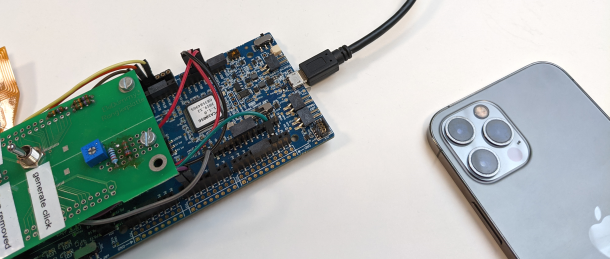
Technical prototypes are used to determine whether something is technically feasible. Often, these focus on interfaces (APIs) or the communication between software and hardware. Technical challenges can thus be identified at an early stage and technical feasibility clarified. This is often referred to as a "proof of concept" (PoC).

Hardware technical prototype

Why prototyping is so important

Concepts, user flows, visual designs and technical feasibility can be validated early on in the process using prototypes and optimized accordingly before significant development costs are incurred. This helps to avoid bad decisions that would result in time-consuming and costly changes later on.

Prototypes help future users or clients visualize how a solution will function. They illustrate the idea behind a planned solution and show how it will work and feel. That's why prototypes are also a vital tool when it comes to convincing decision-makers, stakeholders or potential investors of an idea.

With prototypes, we can:

  • Validate and test early on, before development costs are incurred.

  • Avoid wrong decisions, reducing the need for costly adjustments later.

  • Make ideas tangible: convince people by giving them a tangible vision of a product.

Max Hurter Max Hurter

"The collaboration with Apps with love was everything I had hoped for: My own ideas could be developed quickly in the collaboration and an interesting product was created, which gives a great first insight into the planned app. As I come from a different professional field, I was very reliant on the expertise of the Apps with love employees, who always supported me and helped me move forward."

Max Hurter
A prototype was created for his Cosmos project.

Whether functional, visual or technical: we take your idea to the next level through prototyping and ensure it convinces – from the first presentation to the final implementation.